
Aquaponic Systems for Oʻahu Homes and Schools
Designed, built, and maintained in Mililani by the same team at Wai Gardens.
Aquaponics grows food using the same nutrient cycle that runs Hawaiʻi’s loʻi. Fish feed plants, plants clean the water for the fish. We design and install backyard systems for Oʻahu families, turnkey systems for Hawaiʻi schools, and we support you by keeping them running with monthly or quarterly maintenance.
Why aquaponics matters on Oʻahu
Hawaiʻi has some of the best year-round growing conditions in the country and, at the same time, one of the most import-dependent food supplies in the developed world. Roughly 80 to 90 percent of the food eaten here arrives by ship through Honolulu Harbor, and at any given moment stores hold only about five to seven days of food (Hawaiʻi Sea Grant / HI-EMA). By the best peer-reviewed benchmark, the islands grow only about a tenth of what they eat.
Fresh vegetables are among the categories we import most, with about seven of every ten shipped in. Those are exactly the foods a household can start producing at home. A backyard aquaponics system grows fresh vegetables and, if you want, edible fish protein year-round, right in your yard in Mililani. It will not replace every trip to the store, but it puts a real, resilient share of your family’s fresh food within a few steps of your kitchen.
Want the full picture, with sources? Read our Food Security on Oʻahu page.
What is Aquaponics?
Aquaponics is hydroponics with fish. Fish live in a tank, their waste produces ammonia, bacteria in a biofilter convert that ammonia into nitrate, the nitrate-rich water feeds the plants, the plants pull the nutrients out and clean the water before it returns to the fish. It’s a closed loop — almost no water goes out, no fertilizer goes in, and the fish are eventually edible too if you want them to be.
For most Oʻahu homes the practical advantages over plain hydroponics are three: you use 90% less water than a traditional in-ground garden, you grow more pounds of food per square foot, and the system mostly runs itself once it’s cycled. The trade-off is one of complexity — there is a living animal in the loop, which means the build and the early weeks of cycling matter more than they would for a tower garden.
Systems we build on Oʻahu
Media bed aquaponics
Best for backyard residential installs. Gravel or expanded clay media in a flood-and-drain grow bed. High biological filtration capacity, supports a wide variety of crops, great for fruiting plants and root vegetables, easier to manage for beginners.
NFT raft aquaponics
Best for larger leafy-green production, schools, or cafés. Plants float on rafts above a deep, aerated tank. Highest yield per square foot of any system we build, excellent for continuous harvesting, simple mechanical design with few failure points.
Vertical DFT raft aquaponics
Best for space-limited installs and schools wanting to demonstrate the full nitrogen cycle in a small footprint. Very visual — ideal for classroom use. Produces as much as three times more food per square foot than a tower garden.
Fish species we work with
Fish that thrive in Oʻahu aquaponic systems
Hawaiʻi’s climate is unusually friendly to several fish species, not all of them are legal to keep without a license, and some get aggressive in small tanks. Here’s what we recommend by use case.
Tilapia (Oreochromis sp.) — young fish only
The most widely used aquaponic fish in Hawaiʻi. Fast-growing, heat-tolerant, and highly efficient at converting feed to ammonia. Tilapia are legal to keep in Hawaiʻi but you must have a permit. We help our clients navigate the permit process.
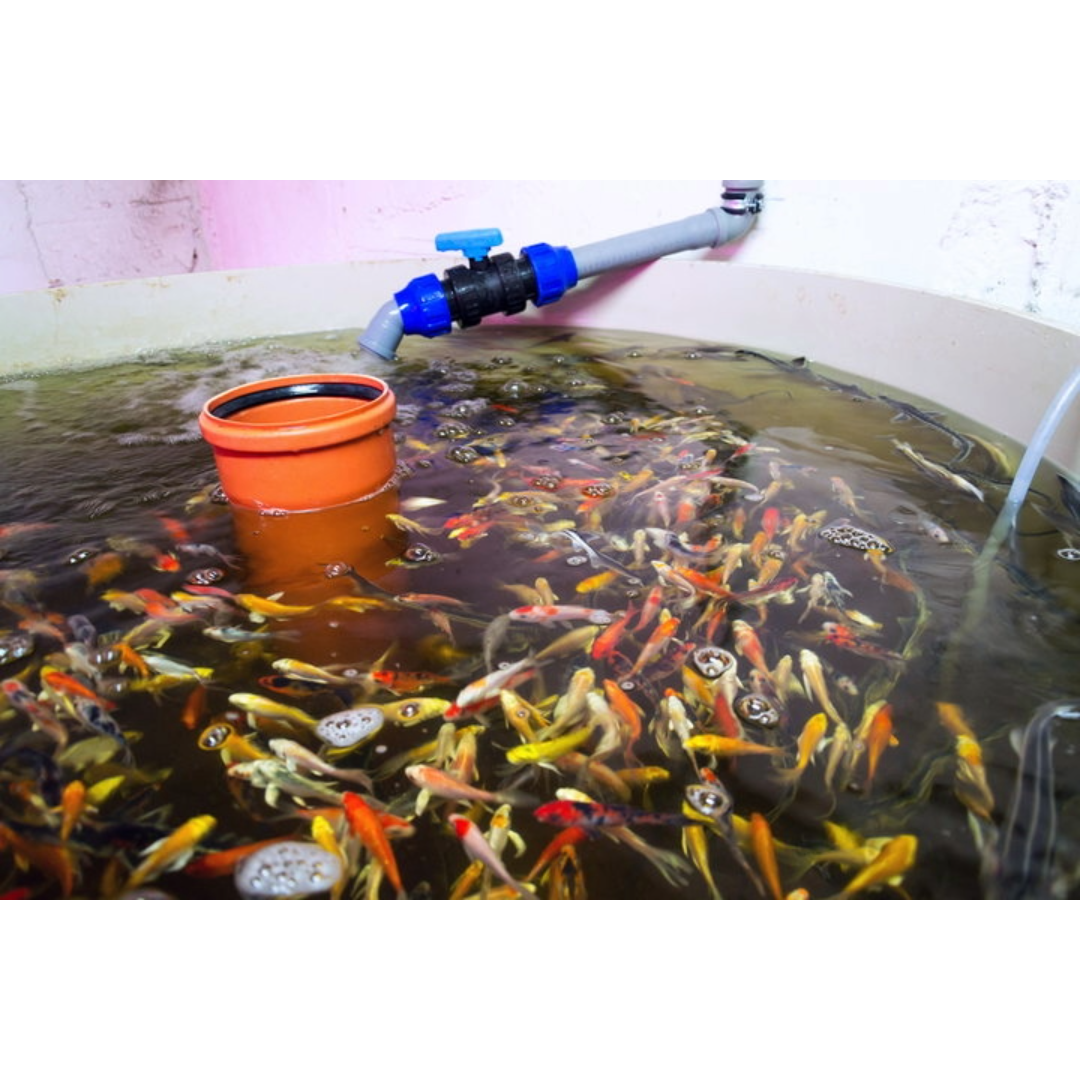
Koi and ornamental goldfish
A great choice for homeowners who want a beautiful backyard system and are not focused on eating the fish. Koi are legal in Hawaiʻi with a permit, produce strong ammonia loads that feed a large grow bed, and can live for decades with proper care.
Catfish (various species) in larger systems
A good choice for larger backyard or farm-scale systems. Produce a lot of ammonia relative to feed, which makes them highly efficient plant feeders. Species choice matters between Oʻahu districts; we advise on this during the site evaluation.
The Building Process
How we build your system
1. Free site assessment
We come to your home or school at no charge, look at your space, sun exposure, water access, and discuss what you want to grow and whether you want edible fish. No sales pitch, no obligation. Book through the Evaluate Your Space form.
2. Building plan and proposal
We deliver a written proposal within five business days with the system type, size, fish species recommendation, plant capacity, installation timeline, total project cost, and maintenance options. You see everything before committing.
3. Build day(s)
For most residential aquaponic systems, installation takes 2–3 days on site. We bring all materials and handle all plumbing, electrical connections to pump timers, and structural support.
4. Cycling & first fish
We cycle the system for you — testing ammonia, nitrite, nitrate, and pH daily, adjusting, and seeding beneficial bacteria — before we add fish. The cycling period runs 2–6 weeks. Once ready we add your first fish, transplant seedlings, and walk you through daily and weekly checks.
5. Ongoing maintenance (your choice)
Choose monthly or quarterly maintenance visits — or manage it yourself after our onboarding session. For schools we offer full weekly service including water testing, fish feeding coverage during school breaks, and curriculum integration support.
Have questions about what would work in your space? Reach out and talk to Tyler directly. No sales pitch, no obligation.
Aquaponics in Hawaiʻi classrooms
Schools are why we built this service. An aquaponic system in a classroom teaches the nitrogen cycle, water chemistry, biology, ecology, and food sovereignty — all from one system on one wheelcart. We design Pre-K through 12th grade systems that fit existing classrooms, and we supply the curriculum your teachers can pick up and run with.
✓ Curriculum aligned to Hawaiʻi CCSS standards & NGSS
✓ Teachers trained on every install
✓ No STEM background required from your school’s staff
✓ Options for classroom-to-cafeteria supply chains
Frequently Asked Questions
What’s the difference between aquaponics and hydroponics?
Hydroponics uses mineral salt solutions to feed plants directly. Aquaponics replaces that with fish waste processed by bacteria into plant-available nitrate — a more self-sustaining, biologically diverse system that also produces protein alongside vegetables.
How do I get started?
Book a free site evaluation through the Evaluate Your Space form. We come to you, assess your space, and tell you exactly what’s possible. No obligation.
How often does an aquaponics system need to be cleaned?
Media bed systems need a solids-removal flush every 4–6 weeks. Raft systems require more frequent mechanical filtration clearing. We cover this in our maintenance visits and onboarding session.
Can I feed the fish?
Yes — and that’s part of the fun. We set you up with the right feed and a daily feeding schedule tuned to your fish load and grow bed size.
How much electricity does it use?
A typical residential system uses 60–120 watts continuously — roughly the same as two LED grow lights. Most of that is the air pump keeping the fish tank oxygenated.
What if my fish die?
It happens, especially in the first six months. We walk you through what caused it, replace the fish at cost, and adjust the system if needed. After the first year, losses are rare in a well-managed system.
How can I contact you?
Use the contact form on this site, or text us directly. We respond to all inquiries within one business day.
What happens during a power outage?
Fish need oxygenated water. If the air pump goes off for more than a few hours in warm Oʻahu weather, fish can die. We recommend a battery backup air pump on every install.
Do I need a permit to keep fish in Hawaiʻi?
Yes for tilapia and koi. The State of Hawaiʻi requires an Aquaculture license for tilapia and a permit for certain koi species. We help our clients navigate the application.
What plants grow best in aquaponic systems on Oʻahu?
Leafy greens and herbs thrive: lettuce, kale, chard, bok choy, basil, mint, cilantro. Fruiting plants do well in media bed systems with higher fish loads. We advise on plant selection during the site evaluation.
Do you serve all of Oʻahu?
Yes. We are based in Mililani and serve the entire island with no travel surcharge — Wahiawā, Waipʻio, Pearl City, ʻAiea, Kapolei, Honolulu, Kailua, Kāneʻohe, the North Shore, and the Leeward Coast.
How long until I’m harvesting?
Fast greens and herbs can be ready 4–6 weeks after transplanting into a cycled system. Figure 8–12 weeks from build completion for a first real harvest. Fruiting crops take longer — 14–20 weeks from transplant.
Can you take over a system someone else built?
Yes. We offer system assessments for existing aquaponic installs. We diagnose what’s not working, recommend repairs or upgrades, and can take over maintenance.
Start growing your own food this year
Oʻahu keeps only a few days of food on its shelves, and most of our fresh vegetables arrive by ship. A backyard aquaponics system is one real thing your household can do about it, and it starts with a free look at your space.